Land degradation affects an estimated 3.2 billion people globally, posing a significant challenge, especially for the one in five individuals who rely directly on wild species for their income and food.
In the context of this widespread environmental crisis, I had an unique opportunity a couple of years ago to conduct a social life cycle assessment for a bio-based engineering material. During this assessment, I learnt that the primary raw material for this product was castor, a crop cultivated in my own hometown of Andhra Pradesh, India. India is a major hub for global castor seed production, accounting for approximately 88.48% of the world’s total supply. This experience provided me with a firsthand perspective on the environmental and human aspects of the castor value chain and deepened my understanding of the challenges associated with sustainable sourcing. I gained a deeper understanding of the environmental impact and human aspects associated with the bio-based value chains. This included the involvement of small-scale farmers, labour practices, market conditions, and the implementation of the supply chain code of conduct. This experience prompted a critical question: Where do the raw materials for the products I use come from, and are they sourced ethically?
As a person and a customer, my interests are regarding the sourcing of the materials as well as the welfare and rights of the people involved in the production. Can technology bridge this gap and provide visibility into these value chains? Blockchain technology offers a powerful solution.
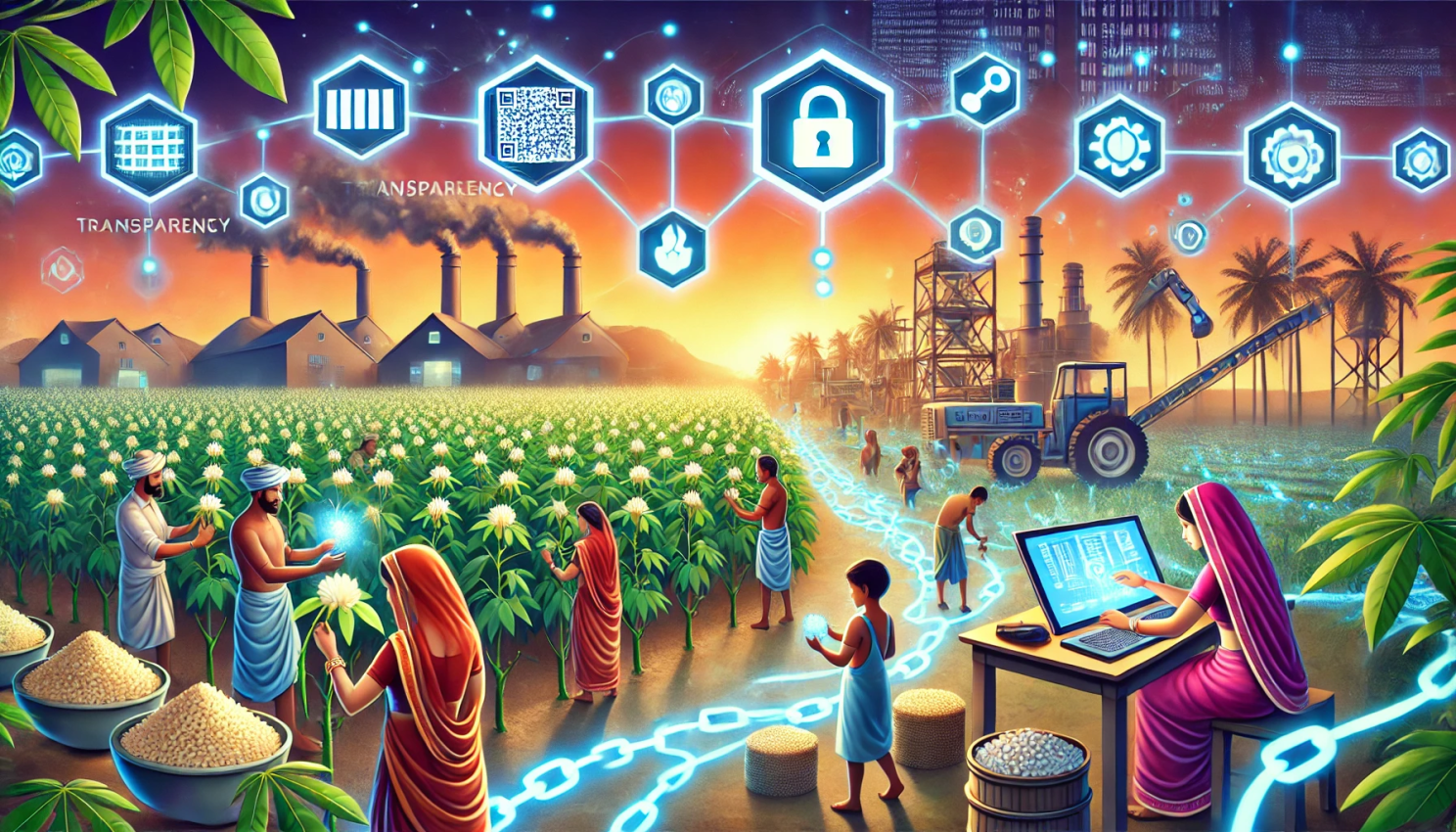
What is Blockchain Technology?
Blockchain technology is a decentralised digital ledger that records transactions across a network of computers. Each transaction is grouped into a “block” and linked to the previous block, forming a “chain” of information. This technology ensures that all transactions are transparent, immutable, and accessible to all parties in the network. In the context of supply chains, blockchain provides a detailed, traceable record of every step a product takes from raw material to the end consumer. For simpler explanations check out this resource: [link 1].
How Blockchain Supports Supply Chain Management
Transparency- Blockchain creates an open and immutable record of every transaction in the supply chain, allowing consumers to trace the journey of products from origin to store. This transparency helps verify claims about the origin and quality of products.
Accountability With blockchain, every participant in the supply chain has access to the same data, making it easier to identify and address issues such as fraud or unethical practices.
Efficiency By automating record-keeping and verification processes, blockchain reduces administrative overhead and streamlines supply chain operations, leading to cost savings and reduced environmental impact.
Safety and Quality Assurance Blockchain ensures that products meet safety and quality standards by providing a verifiable record of each step in the production and distribution process.
Examples of Organizations Using Blockchain Technology
Many organizations have started to explore this technology to improve transparency and traceability in their supply chains. For example
Unilever uses blockchain to manage its tea supply chain, ensuring the traceability and sustainability of its products. This initiative helps monitor the working conditions and environmental practices of tea farmers. More on Unilever’s initiative.
Nestlé has implemented blockchain to enhance food traceability, allowing consumers to trace the origins of their food products. This initiative aims to improve food safety and build consumer trust. Read more on Nestlé’s project.
Walmart uses blockchain to track food products across its supply chain, significantly reducing the time required to trace the origins of contaminated food from days to seconds, thereby improving food safety. Learn about Walmart’s blockchain initiative.
The Challenges of Implementing Blockchain
While blockchain technology offers significant benefits, its implementation is not without challenges. For instance, the UNECE Blockchain Pilot for the cotton industry demonstrated the potential and complexities of using blockchain for sustainable fashion. The pilot revealed that blockchain could enhance transparency and traceability but also highlighted the need for collaboration across a vast network of stakeholders, including small-scale farmers. Overcoming barriers such as lack of access to technology, limited digital literacy, and the costs associated with implementing blockchain solutions is crucial.
Bridging the Gap: The Importance of Social Sustainability Programs
During my work on the castor value chain, I encountered an organization focused on creating a sustainable castor supply chain, similar to initiatives like the Roundtable on Sustainable Palm Oil or the Sustainable Mica Initiative. For example, BASF and other industry players have formed the Pragati initiative to promote sustainable castor production. This initiative includes training programs for small-scale farmers, funding for technological resources, and efforts to build stronger, more ethical supply chains. This program has over 7,000 farmers who have been trained, audited, and certified. More than 74,500 tons of certified castor seed have been cultivated. (source)
To conclude, blockchain technology holds immense potential to transform supply chain management by enhancing transparency, accountability, and efficiency. However, its success depends on more than just technological innovation. Effective implementation requires a commitment to both environmental and social sustainability.
Have you encountered any innovative uses of this technology, or do you have insights on overcoming the challenges of blockchain implementation? Share your thoughts and experiences in the comments below—I’d love to hear from you!